
Why the Legal Resources Centre Matters: Justice Catherine O’Regan on the Rule of Law
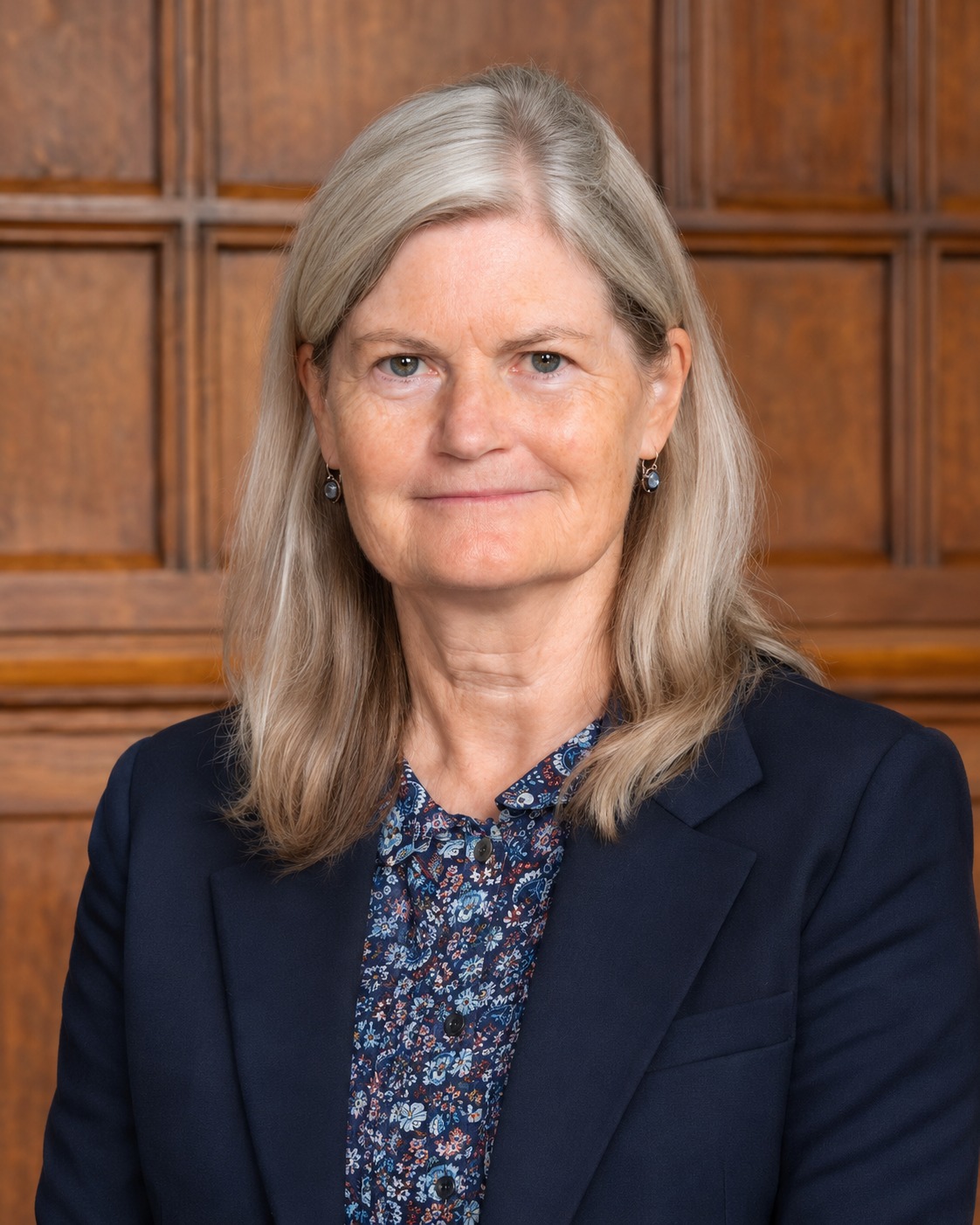
Remarks by Justice Catherine O’Regan on receiving the 5th George Bizos Human Rights Award from the Legal Resources Centre of South Africa.
Greetings to the members of the Bizos family who are here today, to members of the LRC community, both its board and staff members, and its alumni, so many of you in this room have worked at the LRC over the half century of its existence, greetings to the many judges in the room, as well as to the many former law clerks of the Constitutional Court who are here, and of course greetings to those of you from different walks of life, whether it be universities, boards, civil society, business and government, and to friends, indeed, warm greetings to you all –
I feel very moved and humbled to have this award bestowed upon me, and I would like to express my sincere thanks to you Thandi, and Nersen, and all the members of the LRC Board and the staff of the LRC for this very generous acknowledgement. To receive an award from the LRC and one in the name of George Bizos is an extraordinary honour for me. The LRC was established when I was in law school, and it stood as a beacon of hope in those dark days for those who were seeking to find ways for law to be used in the service of justice, at a time when that seemed a forlorn possibility. I like many of my friends and colleagues admired enormously the work that was undertaken by the LRC, its navigation of the complexities of serving ordinary people’s unmet legal need in the Hoek Street clinic, a clinic which was very close to George Bizos’ heart, on the one hand, and the desire to find cases that could be used for strategic litigation to maximise impact. George Bizos and Arthur Chaskalson, along with the other lawyers like Duma Nokwe, Geoffrey Pitje, Victoria and Griffiths Mxenge, Shun Chetty, Felicia Kentridge, Morris Zimmerman, and many others, who had kept the idea of the rule of law, alive through the darkest days of apartheid were an inspiration to young lawyers in the late 1970s and 1980s. George’s work over decades for those who faced the brunt of the brutality of the apartheid state is legendary. I remember once spending time talking to him in the first decade of this millennium at a graduation at Wits for perhaps 20 minutes or 30 minutes. In that short period of time, I lost count of the people who came up to him to tell him that he had represented a family member or friend at some time over the last decades, and to express both their sincere gratitude and their admiration for him. George spoke to each of them, often recalling the details of their stories and telling me about them as each person moved on. It was a memorable testament to his work not only in the service of famous political leaders, but of ordinary people, and the care, respect and kindness with which he treated all of them. He was indeed an exemplary lawyer, who was an inspiration to so many. I feel it is a deep honour to receive this award in his name.
I would like to say a few personal words to those amongst you who are my friends and colleagues – to thank you for coming and to acknowledge how much I appreciate the opportunity to work with you over the last many decades: fellow justices of the Constitutional Court, my former law clerks, I cannot name you all, but you know who you are, and sincere thanks to all of you, your seriousness of purpose in approaching the work of the court, your energy and passion for the Constitution and South Africa, all your insights and wise guidance not to mention all that cite checking; to friends and colleagues I have worked with in other parts of my life, Vusi Pikoli, whom I worked with on the Khayelitsha Commission over ten years ago now, colleagues who I have worked with in other capacities, on the boards of civil society organisations, and in academia, both former and current students and colleagues.
One of the great rewards of my career in the law has been the people I have worked with, perhaps made especially valuable because of the intergenerational character of my colleagues. As a young lawyer, I benefited from outstanding mentors, such as John Brand, at Bowman Gilfillan, John Dugard, who gave me my first academic job, and of course as a young judge I was fortunate to have remarkable colleagues, brilliant and brave lawyers, who accepted me without question when I joined the court. As time has passed, the relationships have changed so that I am now the older senior colleague and I can say that I have continued to learn from and enjoy relationships with younger lawyers, law clerks, young researchers and doctoral students, some of whom are also here today, as much as I did my relationships with my older colleagues. In many ways and echoing the words of our remarkable newest Nobel Peace Laureate Navi Pillay, I feel that the George Bizos award is an award to all those with whom I worked over the decades of my career. Thank you all for your collegiality, wisdom and good company over many years.
I would also like to acknowledge and say a special and heartfelt thanks to my husband, Alec Freund, who turned 70 this week. Alec and I have been together since 1980, good heavens can it be that long! And it seems important in accepting this award to acknowledge Alec’s love, support and great company over those many years. If it was possible for me to engage robustly with my colleagues at the Constitutional Court, even when I disagreed with them, and I often say that disagreeing with Justice Chaskalson or indeed Justice Kriegler or Justice Moseneke felt like being in a very small rowing boat facing a very large ocean liner, the reason for my being able to do so, probably lay in the many years of training I had engaging (and not rarely disagreeing) with Alec robustly on many different issues – political, legal, historical, personal and literary. We have had many years of vigorous conversations, and many shared extraordinary experiences, our relationship has indeed been the great blessing of my life. Thank you Alec.
In thinking about what I wanted to say this evening, I decided I wanted to discuss why the Legal Resources Centre, and those who work in it, and those other similar organisations across South Africa, matter so much.
We live in a time of intense global inequality, heightened geopolitical tensions and weakened democracies. It is a different time to the time when South Africa transitioned to democracy in the early 1990s when democracy was in the ascendant across the globe. Indeed, Samuel Huntington described the period from the mid 1970s to the turn of the millennium as the period of the third wave of democracy.[1] From the shift from authoritarian governments to constitutional democracies in Spain and Portugal in the 1970s, to the transitions to democracy in many Latin American countries from the time of the generals in this period, the fall of the Berlin Wall in 1989 which led to the establishment of democracy in many countries of central and eastern Europe, the period saw a great awakening of democracy, and South Africa was part of that wave.
But here we are more than three decades later witnessing an alarming shift globally away from democracy towards forms of authoritarian populism on every continent, and in many longstanding democracies as well as in newer ones. We have learnt that no democracy is safe, they are all potentially at risk. In its latest Democracy Report, the V-Dem Institute, observed that democracy is for the average global citizen back to where it was 1978, with the gains of the third wave of democracy largely eradicated. 74% of the world (that is 6 billion people) now live in autocracies and only 7% (that is 0.6 billion) in liberal democracies.[2]
The characteristics of the authoritarian playbook are well documented: the most frequent being –
- attacks on freedom of the press (made easier in a time when the media’s business model is in crisis) and on freedom of expression (whether it is artists, film makers or authors) (V-Dem says 73% of autocratising countries employ this tool);
- attacks on independent branches of government, courts, electoral commissions, ombuds and others;
- attacks on those organisations outside of the public sector which sustain democracy – what Professor Vicki Jackson has called knowledge institutions – universities, research organisations, and policy think tanks[3] – particularly to sow doubt about facts and science, and often to instil fear and loathing through the use of conspiracy theories, and
- attacks on civil society,
- sometimes incremental and sometimes aggressively accelerated changes to systems of governance to enhance the power of the executive branch of government at the expense of the authority of other branches.
These routine stratagems of the contemporary authoritarian bear some similarities to the stratagems of would-be authoritarians in other moments, but there are also marked differences. We see far fewer direct challenges to the democratic project,[4] fewer coups d’etat, with the exception in recent years of the Sahel region of Africa, and more insidious undermining of it, than has been the case at other times.
These then are the tools of the contemporary authoritarian playbook and they have been deployed across many countries in the last few decades, including Hungary, Poland, India, Mexico, Venezuela, and of course the United States and many more. Here in Africa we have seen significant shifts towards authoritarianism in Benin, Zimbabwe, Tanzania, Ethiopia and others. And many more democracies are, as the American scholar Kim Lane Scheppele puts it, only one bad election away from democratic catastrophe. The catastrophe lies primarily of course in the destruction of the possibility of change through elections, which autocrats, while not eschewing elections, seek to secure. The list of countries in this category is according to Scheppele a long one that includes France, the UK, and South Africa.
Not only do authoritarians share the same playbook, but many of them (though not all) also share similar aims, and that aim is often self-enrichment of the authoritarians themselves and their backers. An extraordinary number of the world’s most established authoritarian leaders (and their families and supporters) are fabulously wealthy. Wealth that they did not bring into government, but that they gained from being in government.
Closely associated with the decline in democracy over the last 30 years has been the extraordinary explosion in global inequality. The very richest people’s share of global wealth is staggering, and many of these extremely rich people, though definitely not all, build close relationships with power. This rise in inequality has been accompanied by the decline in industrial production in the global north and its remarkable expansion in what were considered to be developing countries only a few decades ago, notably in China, but also in other countries such as India, Vietnam, Turkey and others.
The concomitant trend has been that many people in the developed world have got relatively poorer, and although there has been a transfer of wealth and income from the developed world to the developing world, the share of that wealth in the developing world is not evenly spread, either between countries or within them. Even in China, where the last three decades have seen a huge number of people moving out of severe poverty, the levels of wealth inequality are extremely high. A notable consequence of people getting poorer or feeling that the barriers against entry into the more well-off section of the society are too high is anger and frustration.
We see this expressed in societies across the world all the time. Often it is expressed in forms of political protest that are intense, angry and spontaneous, such as the Cockroach Movement in India, where young people apparently triggered by the manner in which admissions tests to medical school exploded onto the streets. The strange name of this movement appears to have originated in an insensitive remark by the Chief Justice of India from the bench of the Supreme Court in May 2026. We are seeing it at the moment in France where young people are protesting both the condition of their schools, but also the broader societal conditions that they face. And in South Africa, we saw a similar phenomenon in the Fees Must Fall movement. More recently, and more alarmingly we are seeing it in the March and March movement. These forms of protest are symptomatic of the dissatisfaction and anger with the way in which societies are functioning but they rarely lead to organised political organisations with the institutional capacity to engage effectively in politics.
If the tools in the authoritarian playbook are well-known and all too frequently employed, the tools for those who would resist the slide to authoritarian populism are less clear. The available tools in any country depend on history, levels of political and civic organisation, political culture, constitutional and legal frameworks, and the level of authoritarian rule that has been established. There is no off-the-shelf, one-size-fits-all, democratic defenders’ playbook. How to resist authoritarianism thus remains by and large a local project.
The tools of resistance to authoritarianism are of many sorts, and I cannot discuss them all tonight, so I have just selected three: first, of course, in a functioning democracy where elections remain at least reasonably free and fair must be politics. Politics is the arena where the drivers of poverty and inequality can be primarily addressed. But engaging in politics is hard, requires skill, political flair, dedication, as well as high levels of organisation and financial support. And it requires political parties. The American political scientist Elmer Schattschneider writing in the 1940s argued that: “modern democracy is unthinkable save in terms of parties. As a matter of fact, the condition of the parties is the best possible evidence of the nature of any regime. …parties are not therefore merely appendages of modern government: they are in the centre of it and play a determinative and creative role in it.”[5] Much has happened in the eighty years since he wrote, but political parties remain, as Stephen Gardbaum recently wrote, “the central actors in modern democracies. They define the terms of democratic and political competition, raise the majority of funds, mostly select which individuals we can vote for as chief executive and/or legislators, significantly structure political and policy debate, and hold and exercise state power.”
Political parties are thus central to the protection of politics, both to develop concerted action, to formulate and implement policies, and to coordinate across many different interest groups. But in fact in many places political parties have failed to resist attacks on the democratic project, and in some cases they have been active enablers of backsliding. There are many factors that are relevant here but I will mention just two: high levels of political polarisation across party lines, which often results in the demonisation of opponents, and which can lead to voters supporting what they perceive as their party even when the party may be actively undermining democratic structures, and weak institutionalisation of parties with dominant leaders, so that internally parties present little resistance to authoritarian leaders.
A second key element in the toolbox is the protection of the processes and institutions that protect democracy, notably of course free and fair elections. A major institutional reform in the third wave of democracy was the establishment of independent electoral commissions, now common in Africa, and there are clear signs that these commissions have been important, though of course there have been troubling exceptions, to delivering free and fair elections on this continent. There are a range of strategies to undermine free and fair elections, which include undue political influence, or interference, in the appointment or removal of commissioners of the electoral commission, intimidation or influence over commissioners while performing their roles, undermining of commissions through inadequate resourcing, weak regulation of elections that enable manipulation or fraud, and improper influencing of voters through vote buying and other techniques.
A third key element in the toolbox is the protection of the rule of law. Now the rule of law, as Michael Oakeshott famously remarked, bakes no bread.[6] And indeed exactly what it means is contested. Legal theorists tend to think of the rule of law primarily in conceptual terms, that the rule of law consists in the qualities of law (Lon Fuller’s morality of law which requires that law be published, prospective, consistent, implementable and the like),[7] and consists too in legal procedures (Joseph Raz for example supplements Fuller’s principles with principles of natural justice, access to justice and judicial independence)[8] and finally, and importantly, the rule of law consists in law’s power to constrain or as Martin Krygier puts it law’s ability to temper power[9] so that government acts in accordance with law. In his last writing before he died, Raz added a further important element to this conception of the rule of law – that government must act believing that they are serving the interests of the governed, not their own personal interests.[10]
These elements of a conceptual understanding of the rule of law are important, but as important, and rarer for lawyers is recognising that the rule of law in any given society is best understood as a set of social and cultural practices and expectations, what Charles Taylor calls a social imaginary.[11] Thinking about the rule of law like this means that we can consider that the rule of law in any given society exists if it informs the way in which people imagine their social existence, in how they understand their society works, the expectations that are normally met, and the deeper normative principles that underpin these expectations. Thinking about the rule of law like this means that we acknowledge both its normative content but also we recognise that whether or not it exists in practice depends in large part on our shared social and cultural values and practices.[12]
As a practical matter, then the key questions to ask to determine whether the rule of law is present in a society are the following:
- Is state power (and must it be) exercised through law?
- Does government act in the interests of the governed?
- If power is exercised contrary to law or arbitrarily is there a channel for effective relief?
- Do both public actors, as well as ordinary people and private institutions, seek to act in a manner consistent with law?
- Do people who are affected by the improper use of law have access to relief through the courts?
- Do courts decide cases which come before them impartially, fairly and competently? And are their orders implemented properly?
- Do most people in a society consider that it is important or to be expected that we can answer these questions in the affirmative or not?
If we can answer all these questions affirmatively at least most of the time, then it is likely that the rule of law will provide a bulwark to protect democracy. In making this claim, I would suggest that while the rule of law is a necessary condition to avoiding democratic decay, it is not a sufficient one.
However, what we have learnt over the last three decades is that probably no society can answer all these rule of law questions in the affirmative all the time without hesitation. Some societies respect some of the rule of law qualities more than others. Some countries can answer more of these questions affirmatively than others.
Recognising that there are different questions to be asked about the rule of law, and that it is unlikely that we can answer them all affirmatively, tells us that the presence of the rule of law should not be understood as an all or nothing state of affairs. It is probably better understood as more or less present rather than simply present or not. As Martin Krygier says the rule of law can be in good shape or poor shape.[13]
In South Africa we probably can say that most of us share an aspiration that these questions as to whether the rule of law is in good shape are answered affirmatively. Our constitution certainly firmly endorses that we should answer the questions affirmatively that is, that state power should be exercised through law, that if it is not, it should be found unlawful, that government and the private sector and individuals should obey the law and there should be relief when that does not happen.
But we also know that we cannot answer all these questions affirmatively. We certainly know that many people find it difficult to access courts, we know that many actors both in public and private society do not obey or respect the law. But we can answer some of the questions affirmatively at least some of the time.
Which brings me back to the question I asked at the outset: why is it that the Legal Resources Centre, and organisations like it in South Africa, matter so much. The answer is that they make an extraordinary contribution to ensuring the health of the rule of law across many of its aspects. They do this in many ways:
First, by providing ordinary people who would probably not otherwise be able to gain access to legal services and to the courts, with excellent legal advice and representation before the courts. If a core element of the rule of law is that ordinary people can bring their cases to court, then the LRC and the other public interest law firms, as well as the large law firms that provide pro bono legal services, as well as other lawyers who provide advice to such clients contribute to the rule of law being in good shape;
Secondly, the LRC seeks to take strategically important cases which will affect the content of the law, to ensure it is consistent with the Constitution and people’s rights, to court and to seek appropriate relief. In this regard, it can and often has played a role in protecting the institutions of democracy from attack and so played a role in defending our democracy and the rule of law. It has also taken cases that require government to protect and fulfil the rights of ordinary South Africans again protecting the rule of law and advancing the conditions in which many South Africans live. I have not done a survey of the number of leading cases in which the LRC has represented clients in the Constitutional Court but it would be a big number and over thirty years those cases have been enormously consequential.
Thirdly, the LRC seeks to train young lawyers, through its internship and candidate attorney programmes, in legal practice. This training builds not only legal expertise, which is enormously valuable, but also often inculcates a set of shared values and norms which contribute to building a shared understanding of the cultures and normative expectations of good lawyering and the rule of law. Many of you in this room today have been beneficiaries of those programmes, and kyk hoe lyk julle nou. The LRC fellowship programme in some ways, I am sure, inspired the establishment of the Constitutional Court law programme, another programme that I think has been a great contributor to building a shared understanding of how to practice law with integrity and courage, committed to the principle of the rule of law.
In conclusion then it is organisations like the LRC that have helped our democracy withstand some of the buffeting that it has encountered in recent years. It uses some of the key tools that are available in our society to render our democracy resilient, which is independent courts, a strong constitutional framework and a vigorous civil society. These are powerful tools, but they are not necessarily eternal. Just last week, I spoke at the launch of an exhibition of the artworks of the Constitutional Court at UCL in London. The title of the exhibition is A Luta Continua, which many of you who know the building will know are the words in one of the illuminated artworks in the foyer, words drawn from the language of the liberation struggles in southern Africa, commencing in Mozambique. They are fitting words it seems to me to conclude this address in which I have been thinking about how to protect our democracy from deterioration, how to ensure that the vision of our constitution is realised, and what the LRC and other public law institutions and lawyers generally can contribute to achieve these goals. The original words coined by the leader of FRELIMO, Eduardo Mondlane are, of course, A Luta Continua, vitoria e certo, the struggle continues, victory is certain. Perhaps we need to amend it slightly: A Luta Continua, vitoria nunca e permanente. The struggle continues, victory is never permanent.
Notes
- Samuel Huntington, The Third Wave.
- V-Dem Institute, Democracy Report 2026, https://v-dem.net/documents/75/V-Dem_Institute_Democracy_Report_2026_lowres.pdf
- Vicki Jackson, “Knowledge Institutions in Constitutional Democracy,” 2022 Journal of Media Law.
- Nancy Bermeo.
- E.E. Schattschneider, Party Government (1942, Rinehart and Co, New York), 1.
- Quoted in Jens Meierhenrich and Martin Loughlin, The Cambridge Companion to the Rule of Law (Cambridge 2020).
- Lon Fuller, The Morality of Law.
- Joseph Raz, “The Rule of Law and its Virtue” (1979), in The Authority of Law.
- Martin Krygier, “Tempering Power,” in M. Adams et al., Constitutionalism and the Rule of Law (2017).
- Raz, “The Rule of Law and its Virtue” (2019).
- Charles Taylor, Modern Social Imaginaries (2004); see this argument made by Jens Meierhenrich and Martin Loughlin in their introduction to The Cambridge Companion to the Rule of Law.
- Id., 15–16.
- Martin Krygier, “Four Puzzles about the Rule of Law.”